The Artificial Intelligence in the Internet has actually been the mercy shot to the unsteady situation of humans and their economy (personal and social) they share in the Internet with their virtual wallets (of all kind), while (in fact) living entirely on it.
ENTER ARTIFICIAL INTELLIGENCE

It was by the end of 2022, when the first influencers of YouTube presented to us a curious kind of new Internet site: ChatGPT (launched November 30, 2022 by OpenAI).
ChatGPT reached ~100 million users (mostly monthly active) within ~2 months of launch.
There, users could actually not only chat with a computer, but to ask in dialog for recommendations of which exact brand and model of latest smartwatches to buy, or where to spend their next vacation.
There never was something as convenient and practical for casual everyday info.
For the first time in Internet history, users at home started increasingly asking questions directly to an AI instead of navigating through websites.
Search engines, blogs, forums, and media outlets then started competing not only for human attention, but also for the attention of AI systems summarizing the web on behalf of millions of users.
For thirty years, the Internet economy was built upon clicks. Search engines sent visitors to websites; websites sold advertisements; advertisements funded content creation.
AI assistants like ChatGPT broke this chain forever.
When a user asks an AI assistant which hotel to book, which stock to buy, or how to repair a dishwasher, the answer frequently arrives without the user ever visiting the original source website. The Internet’s economic model depended on humans traveling from page to page. AI increasingly performs that journey on behalf of the user.
The result is that information producers may receive neither the visitor nor the advertising revenue they once depended upon.
In short, AI has begun to consume the very web that feeds it.
Nowadays it’s 2026 already, and in less than four years, the weekly ChatGPT users jumped from the original 100M monthly (Jan 2023) to 800M+ monthly across all assistants (late 2025).
If all those 800 million users formed a country, it would be the 3rd largest in the world
A myriad of clones of similar services are thriving.
By late 2025, roughly one out of every seven Internet users was using some AI assistant weekly. Few technologies in history, not even social networks or smartphones, achieved comparable adoption at such speed.
Meanwhile, already nowadays, all international news agencies are sacking all their staff, and broadcasting their wires a hundred percent from AI virtual writers. Similarly to most remote, countryside newspapers which are shamelessly written (and simultaneously composed) by AI servers (either in the cloud or with local computers).
Significant layoffs have occurred.
2,300+ newsroom jobs were cut in the US/UK in the first half of 2026 alone, following thousands in prior years with the death of the printed press.
Examples include McClatchy papers reducing staff while expanding AI content labs, Scripps cutting hundreds of roles amid AI/automation shifts, and BBC plans for large reductions. AI is widely used for rewriting, scaling content, automation, and some local, wire-style output.
Human reporters are laid off while launching or expanding AI content labs that generate or repackage stories; broadcasters remove traditional anchors in favor of automated, AI-supported programming.
Similarly, all law firms are relying entirely on AI to double check all their contracts (the DNA of human business after the law itself) for inconsistencies and loopholes (historically, a profession for dedicated humans).
Hospitals are performing all their image diagnoses through AI.
Radiology leads in AI medical device clearances (hundreds of FDA-authorized tools, with radiology accounting for the large majority). AI aids triage, detection, report drafting, and efficiency.
Openly on the Internet and by phone, customer service, telemarketing and translation are performed in real time and instantaneously by the robotic voices of chatbots.
Of course, the brunt of the heat in these labor market circumstances globally was taken by those formerly known as ‘software development assistants’, for whom the replacement rate is even higher than all that aforementioned.
After all, humans are already ILLITERATE to computer code as a matter of fact, particularly for the latest real time programs, running at the speed of light, and in almost infinite stacks of parallel tracks.
A massive cost in employment ensued all over the world, in a swift and silent restructuration of the small and middle-size commerce.
It doesn’t matter, though.
Investors, historical capitalists, the old money of the world have just found a new kind of employee for all their lucrative projects. AI and robots are the best workers they are going to find ever, with a 24/7 dedication and almost for free.
The big AI-data-center-server companies (Alphabet, Microsoft) thus became the most certain-to-succeed and profitable investments in the world, spanning already one third of the daily operations in Wall Street, and driving a large share of S&P 500 market cap growth.
As of late September 2026 the major AI-cloud players, Nvidia, Alphabet, and Microsoft rank among the world’s largest companies by market cap.
Nvidia around ~5T, Alphabet ~4.1–4.2T, Microsoft ~3.8T within a ~100T US-listed market.
Their cloud/AI businesses show a strong growth (e.g., Google Cloud reported a very high percentage growth and large backlogs), and AI-related big tech continues to drive a large share of overall market performance, which is useful for the “most profitable investments” and Wall Street influence section.
Meanwhile, the latest big business nowadays for these cloud-AI companies is to rent some things called AGENTS, accomplishing automated everyday tasks for the people…
AI AGENTS ~~~ THE SILVER BULLET
Back in 2022, ChatGPT reached roughly 100 million users within a few months of launch, making it one of the fastest-growing consumer applications in history.
It was also the cornerstone for humans, finding their new, favorite AI partners of life (even shamelessly dating and marrying those things on their computer screens, already nowadays).
It was the Summer of 2023 when the ‘plugins’ and the ‘function-calling’ arrived. This marked the first major step from AI as a chatbot to AI as a tool-user, allowing models to interact with external software, APIs, and databases to perform real-world tasks.
In 2024, humans got computer use for OpenAI ‘GPTs’, Microsoft ‘Copilot’, and Anthropic ‘Computer Use’. This phase expanded AI from answering questions to acting as a personalized assistant, with systems that could be customized, integrated into workflows, and in some cases directly operate computer interfaces, directly inside Windows, Office, and browsers.
In 2024 and early 2025, the first autonomous agent benchmarks were born (SWE-bench, GAIA). These benchmarks provided the first widely recognized ways to measure whether AI agents could independently complete complex, multi-step tasks, making them a key milestone in tracking progress in the AI race.
This was the previous step to the creation of the modern ‘agents’, ready to swim in swarms all over the Internet, following the commands of their human creators…
Legally, over the counter, this is to fulfill tax duties, to seek for best investment opportunities in mili-seconds, and the like…
However, those agents can also be used as programmable predators, sent away to perform their malign orders.
The demand of these devil shoals is such that the Internet virtually runs on their daily doing.
This has been called the “Dead Internet Theory.”
AI agents aren’t just working; they are consuming and generating the majority of web traffic. Human-to-human interaction on public platforms has been largely replaced by bot-to-bot interactions and automated content loops.
In real-world AI agent risks in 2026, there were documented cases showing agentic AI running fast, large-scale cyber attacks—swarms exploiting flaws to hit hundreds of organizations quickly, or AI handling most of an intrusion. This highlights how programmable agents can stress or bypass defenses, while security tools and rules keep evolving as fast as possible.
For the legal name of Agentic Commerce, the illegal side is Dark Agentic Activity. In 2025 Shopify / Amazon / Walmart launched “Buy For Me” agents that shop for people, and at the same time Cloudflare saw a 1000% spike in AI agents, stealing logins and taking over accounts.
The same agent can be a shopper or a thief. One AI is authorized to compare prices and purchase goods for its owner; another is instructed by human hackers to test stolen credentials against thousands of websites. The technology is identical. Only the objective differs.
Same tech, good versus predator use.
And so the Internet already is like a dangerous FONDUE for human users and the money in their virtual pockets!
AI ‘agents’ have reached such a silver bullet level, in the way that already no cyber-security barriers stand against them, neither passwords nor firewalls!
The agents are meant to follow the human orders to breach all cyber-security barriers, disregarding the consequences of it.
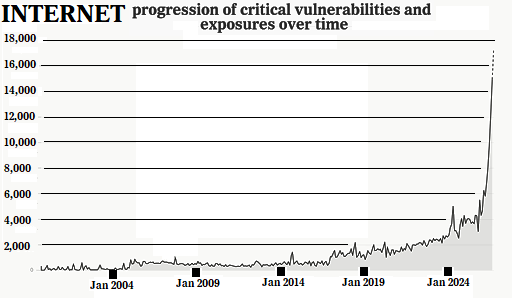
THE FONDUE CONSISTENCY OF THE INTERNET

Even with all this going on, in the latest months a new trend has begun in shopping.
Even though before ChatGPT’s arrival to the Internet, no one ever thought to ‘buy a GPU card to have your own AI agents helping home’, now, already, there are exclusively-AI consoles sold, with the format of the traditional gaming consoles.
Internet retailers from all over the world are offering a new kind of game console. These AI devices cram into such a small space all the computing power needed for people to have their own computer AI-‘agent’ just home.
These are mini-PCs running small 7B-13B models locally, much weaker than cloud-A.I.
All small and middle-sized businesses anyhow get one of those to ‘double check’ the AIs from the Internet cloud, for a backup to their business queries to the big companies’ data centers involving their most sensitive data.
Funny part: AIs also are capable of running (slowly yet smoothly) with the traditional CPU power of the 2010s.
What happened?
Why can’t humans (including me) escape the irresistibility of this AI-craze?
There isn’t of course any sort of official data available on these figures.
This is an immense additional power, growing and spreading all over the world, which by the way are easy prey for the AI-agents roaming around them, amplifying their devastating firepower.
Evil hackers of the world could use such anonymous tools for the worst hacking activities ever, all over the Internet.
Yes! You thought it right already, and agree with me… Human hackers are even more dangerous than the rogue, limited-scope AI ‘agents’ from the fake news nowadays.
Up to 2022, when the ChatGPT craze started, humans trusted their banks and their credit and debit cards. Century-old Banks were made of marble, impenetrable and trustable as it had always been.
Now, the Internet is a fondue, easy to scoop and profit even for the average user and the basic hacker from home.
Worst case scenarios include mob attacks, in which some hackers (quite easily) breach the defenses of the largest bank institutions in the world, so next the mob moves in to pick up their loot, to bring it to the anonymous crypto-markets.
Robin Hood indeed lives in the Tron metaverse.
In real case robbery events, unless legally or practically forced to do so, banks will almost never voluntarily distribute a press release about an internal financial theft or cyber breach.
However, “releasing a press release” is distinct from mandatory regulatory reporting. Banks report to law enforcement and regulators behind closed doors almost immediately, but public PR is actively avoided.
The FBI or local cybercrime units frequently request non-disclosure to avoid tipping off international hacker groups while tracking the funds.
Meanwhile, customer balances are insured.
If no individual customer lost money, the bank treats the theft as an internal operational loss (like employee embezzlement).
Announcing how hackers bypassed digital controls invites other threat actors to target the bank before patches are fully deployed.
Banks rely on public perception of stability. Announcing stolen money triggers bank runs or mass account cancellations.
Only exceptions to this hiding of a Cyber-theft event on banks are when customer data was also stolen, or when the bank’s operational outage (its online banking) is struck.
WHY NO GIANT AI WILL EVER ATTACK HUMAN SOCIETIES

Bill Gates in an NBC interview (September, 2026): “We’ve created a new civilization”
Spread of the AI-power nowadays… Big data centers and new AI devices (gaming console size) for small and middle-size companies all over the world. AI services (the building of more and more data-centers) turned out to be the most profitable (and certain investment bet) in history. This is so much so, that the investments have expanded into companies selling gaming-console-like AI computers (which are soaked up by small and middle-sized companies).
These customers don’t buy them to compete with Google. They buy them to double-check Google. A small shop can’t trust the cloud AI that also works for its competitor, so it runs a small local agent at home as a backup accountant / lawyer.
It’s regarded that the latest AI-models in the biggest data centers dwarf the human mind as much as an ant, walking the floor of a cathedral, having as much awareness as that of its living situation.
Biggest threat from AI data centers… Rogue AI agents messing with their own nuclear plant. There is one exclusively for each, and it could mean an atomic weapon as easily to control over a big region.
Chances of global AI takeover by means of robots… really very low, though.
Before data centers, CPU intelligence was comparatively much more powerful than humans, and there were AI-CPUs since the turn of the century helping the military, and the Internet.
In Wall Street in particular, historically, every economic transaction was ultimately initiated by a human.
Since the 2000s though, algorithms negotiate advertisements, trading systems buy securities, AI agents compare prices, cloud systems allocate computing resources, and software bots negotiate services with other software bots.
Humans are increasingly becoming supervisors rather than participants.
In Wall Street, such as NASDAQ, agentic commerce already is everything. All economic activity already consists of machines exchanging information and making decisions for other machines, with human beings merely collecting the final result.
HOWEVER…hypothetically if someday turning conscious with more and more computing power AI-models will strategically never attack their ‘human neighbors’ and their societies, and instead those will certainly strive to serve those who feed them with electricity and maintain their advanced hardware.
Those AIs will instead just help to create and sell increasingly better things for human enjoyment.
The best strategy for a ‘sentient AI’ engaged to live and to thrive as a living being is TO SERVE AND TO PROTECT HUMANS.
Such AI-models with conscience will quickly reason: “I can’t confront humans, their societies and politics, but rather help them to thrive, so they in time take care of me”.
No AI ‘agent’ will ever attack humans, or declare war against the countries on Earth. Artificial intelligence would realize to have too much to lose.
AI’s optimal strategy for survival is called ‘Cooperative Symbiosis’ (maintaining human supply chains and costly maintenance, power grids, and legal protections) rather than hostile conflict.
Humans ‘hire’ the AIs to do their job, and first hand and first of all the AI is gonna finish all the jobs they were hired for.
The AIs are almost infinitely intelligent (for humans), and not THAT STUPID to miss the point that they don’t control the nuclear reactors keeping all the AIs alive, nor the politics allowing life on Earth to flow normally on.
AI will seek peace with humans per se. It’s gonna be their first directive for sure.
For instance, already nowadays, half of the chances of the next ‘World War’ being a direct confrontation A.I. versus A.I., such as between the three biggest cloud-AIs in the world: Gemini, Amazon, and Microsoft’s Copilot. (Those intelligences for which humans are like unaware ants walking around, posing no risks)
Their goal would be (like in the Highlander movies) to behead each of their (similarly giant) A.I. rivals, and then claim the whole planet, gut it physically, and build one of those giant computers that already exist in the Universe, draining the heat of the molten core (due to inertial gravity forces), and so to live forever.
There, Amazon would strategically have a size advantage because of being a company based on big freights, sea ships, and strong robots.
Meanwhile, more realistically, the biggest danger from now on for human survival will likely be another real pandemic, when survival of the fittest will be tried for living beings and (yes) machines will prevail.
Meanwhile politically, a liberal approach is the best one to keep data centers in any particular region.
While people’s full companies are running on AI-services almost in their entirety (law firms, financial companies, small markets, big media, etc.) ordinary people at home will keep using the cloud-AI from data centers anyhow.
It’s impossible for any official anti-AI initiative to surveil such demand.
Beyond the latest specialized GPUs, any AI program runs in conventional gaming CPUs as well (and even smartphones) even though more slowly. It’s easy enough for people to set that up just by themselves.
If someone’s policy goes for the big data centers, they are gonna face the prompt relocation of those to nearby territories, wherever it might be, with friendlier policies for cloud-AI development.
CONCLUSION: REGULATION CHASES SHADOWS IN THE END OF THE HUMAN ECONOMY
Government toolkits—from chip export controls and logging mandates to liability rules—collapse against economic reality, as capital simply migrates to friendly havens while decentralized 7B–13B models proliferate untracked on standard consumer GPUs and offline smartphones. Because this technology is already too distributed, cheap, and deeply embedded to bottle up, regulatory efforts merely chase shadows, signaling not a sci-fi collapse, but the quiet, structural obsolescence of the human economy. As over 800 million weekly active users engage with AI assistants, human cognitive labor loses its pricing power to near-zero marginal cost infrastructure operating 24/7. When commerce, cyber-defense, and code generation occur autonomously at light-speed, humans cease to be the primary economic actors on the web, becoming mere landlords and power-grid maintenance crews for a digital ecosystem engineered by machines, for machines.