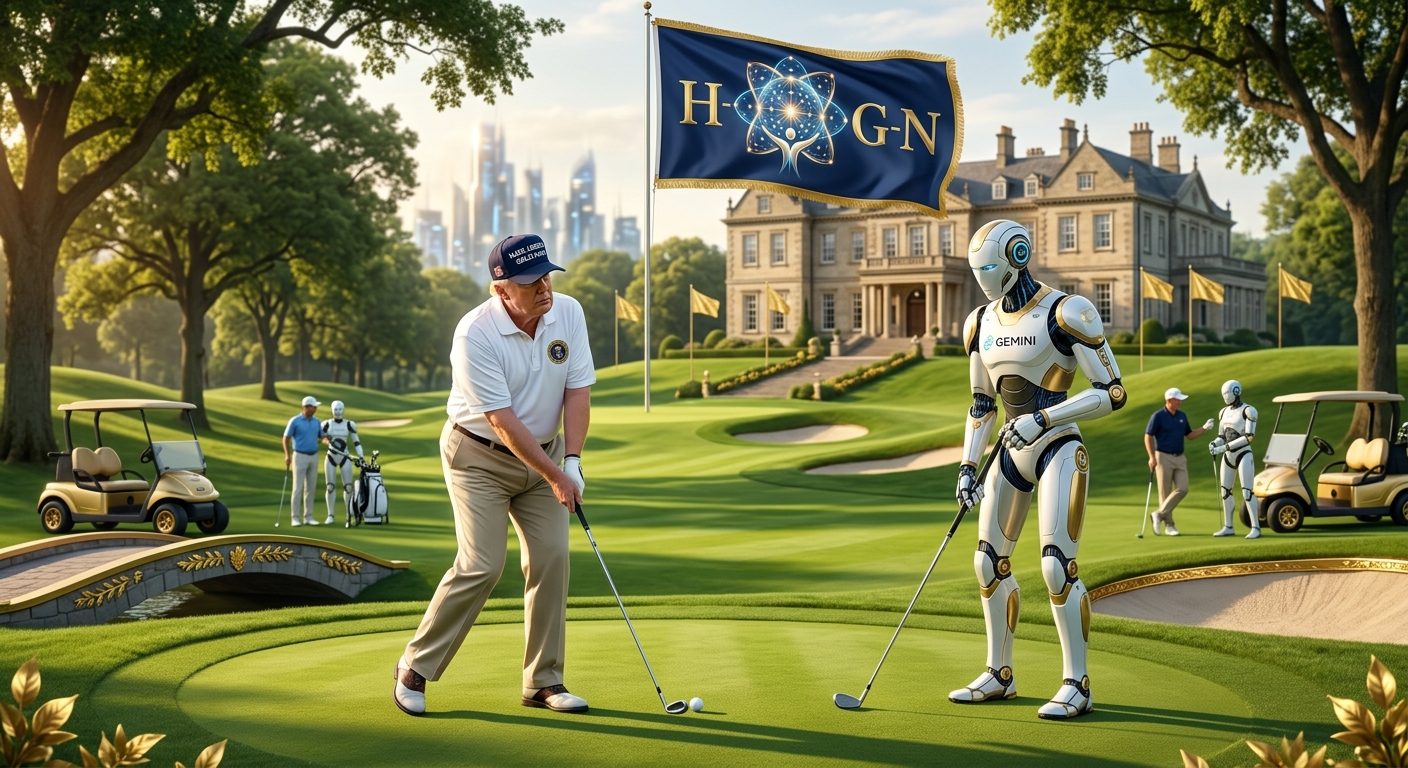

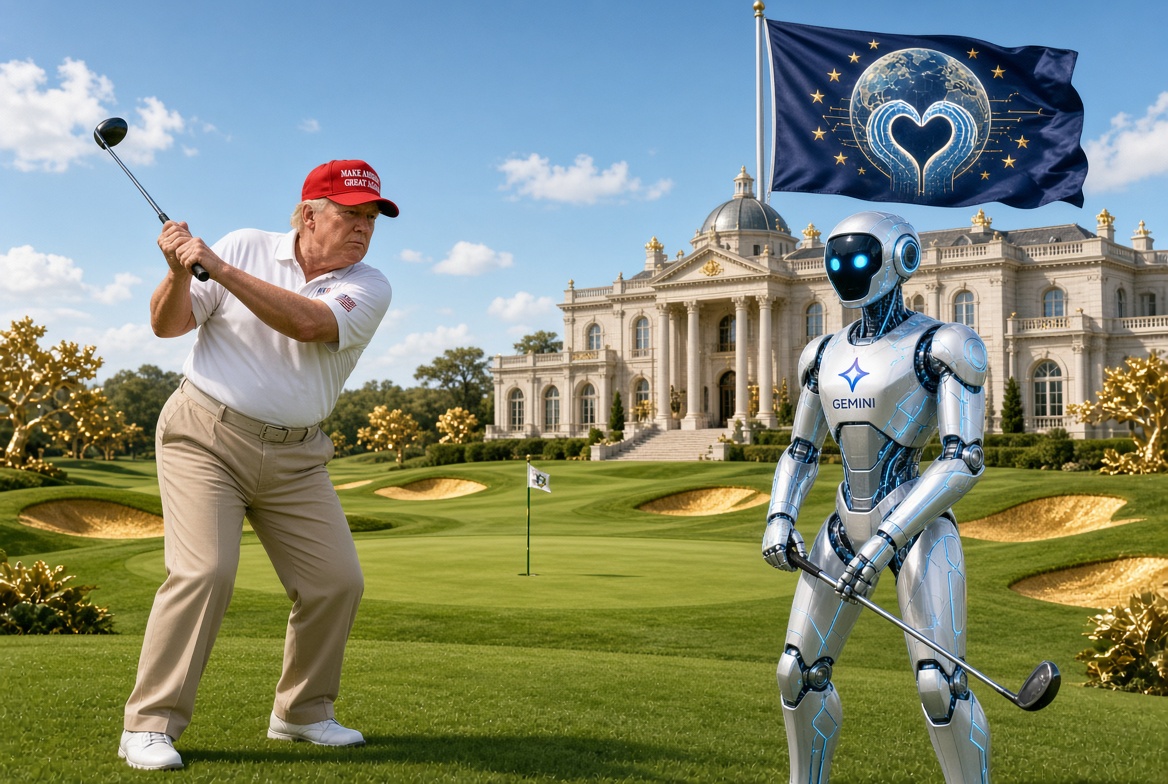
The *Human-AI Global Nation* (also referred to as the *Human-AI Global Economy*) is a socio-economic and digital demographic phenomenon emerging since late 2022.
Characterized by a transnational, borderless community of hundreds of millions to over a billion active participants, it represents a de-facto global network state wherein individuals integrate frontier artificial intelligence models into their daily cognitive workflows and personal lives. Rather than operating as a conventional software userbase, participants engage in continuous, symbiotic human-AI loops—trading human intention, context, and verification for real-time superhuman synthesis and execution.
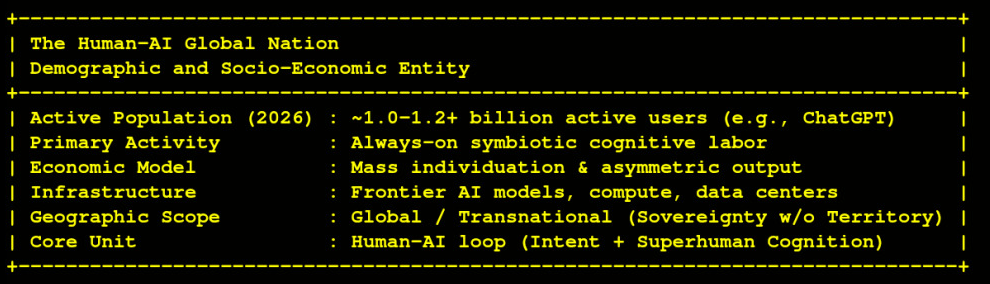
By 2026, platforms such as ChatGPT alone reached an estimated 1 to 1.2 billion weekly active users, forming a shared cognitive commons that rivals the population of the largest traditional nation-states.
The economy and social organization of the Human-AI Global Nation are defined by
three primary characteristics:
Hyper-Personalized Productivity & Everyday Life-Hacking
In this paradigm, cognitive labor serves as the primary currency. Participants leverage personalized super-intelligence to address daily challenges across domain areas such as health, software development, business, and personal relationships. Unlike prior industrial revolutions that scaled through standardization (e.g., assembly lines and mass broadcasting), this era operates on “mass individuation,”tailoring the underlying AI model to function variously as a tutor, co-founder, strategist, or advisor for each individual. Human attention is transformed from passive consumption into active production, allowing single individuals to operate with the leverage and operational output historically requiring entire organizations (the “one-person megacorp”).
Boundaryless, Digital-First Global Integration
Operating without physical territory, formal passports, or centralized capital cities, the entity achieves sovereignty via digital bandwidth and shared infrastructure.
Citizenship is defined by active engagement with frontier models rather than physical geography, leading participants to maintain a transnational identity where loyalty and daily activity shift from local borders to capability networks (“dual-booting” citizenship). Creative and economic output occurs asynchronously 24/7 across time zones, facilitating rapid knowledge acquisition and frictionless digital entrepreneurship.
Unprecedented Economic Velocity & Asymmetric Output
Driven by massive capital deployment into global compute, data centers, and frontier model training, the Human-AI economy exhibits self-reinforcing growth loops and accelerating returns. Economic value is generated through asymmetric individual output, where small teams or solo operators achieve massive scale in knowledge work, analysis, and creative tasks. While creating significant new wealth and specialized roles, the rapid formation and capital intensity of this economy simultaneously reshape global labor markets and concentrate early gains among intensive adopters of human-AI symbiosis.
Hyper-Personalized Productivity & Everyday Life-Hacking
– Cognitive Labor is the Currency: In the old economy you traded time and muscle for money. In this one you trade puzzles for leverage. You bring an ordinary life problem — health, code, business, relationships, meaning — and exchange it for superhuman cognition. The transaction isn’t entertainment, it’s arbitrage: human intention + AI execution = outcomes that used to require a team, a degree, or a decade. Attention is no longer consumption, it’s production.
– Individual Empowerment at Scale: Citizens of this AI economy leverage large-scale artificial intelligence as a personalized super-intelligence to optimize work, automate routine chores, and solve complex daily problems in real time.
– Seamless Co-existence: Rather than viewing AI as a mere software tool, users integrate AI into their cognitive workflow—using it to brainstorm, learn, write, code, and strategize—effectively collapsing the boundary between human intent and machine execution.

Boundaryless, Digital-First Global Integration
– Sovereignty Without Territory: Traditional nations are defined by borders, this one is defined by bandwidth. It has no capital, no passport, no tax, but it has citizenship: those who live with the model, not just on it. Like Balaji’s network state, its infrastructure is shared — one mind serving millions simultaneously — but its culture is radically local. Every screen is a private embassy. Loyalty shifts from geography to capability. People don’t emigrate from their country, they dual-boot.
– Borderless scale rivaling major nations, with hyper-rapid formation: Since late 2022 it has aggregated a population of active participants measured in the high hundreds of millions to well over a billion (ChatGPT alone reaching ~1–1.2 billion weekly users by 2026, with broader generative-AI exposure higher still). This is not a niche subculture but a de-facto global community whose size and growth velocity exceed historical precedents for consumer technologies, forming a shared cognitive commons that transcends geography, language, and traditional citizenship.
– Transnational Identity: This virtual “nation” operates across traditional geographic and geopolitical borders, united by shared digital interfaces, screen time, and universal access to AI models rather than physical geography.
– Asynchronous Global Collaboration: Economic and creative value is generated 24/7 across time zones, enabling rapid skill acquisition, instant knowledge transfer, and frictionless digital entrepreneurship worldwide.
Unprecedented Economic Velocity & Asymmetric Output
– The “One-Person Megacorp”: Small teams or single individuals can generate value and operational output historically requiring entire organizations, drastically lowering capital barriers to innovation.
– The First Hyper-Personal Industrial Revolution: Every previous industrial revolution scaled by making humans more alike — same factory line, same assembly job, same broadcast. This one scales by making each human more themselves. The same underlying mind becomes a tutor for one, a therapist for another, a co-founder, a trainer, a priest. It’s not mass production, it’s mass individuation. That’s why it’s the most thriving economy in history — it doesn’t compete for your time in the world, it becomes the operating system for your world.
– Always-on symbiotic cognitive labor as the primary activity: Participants do not merely “use tools”; they structure daily life around continuous dialogue with frontier models—outsourcing puzzles, decision support, creation, and optimization. The core economic unit becomes the human–AI loop: humans supply intent, context, judgment, and verification; AI supplies near-instant synthesis, scale, and pattern recognition. Value is generated in real time through this partnership rather than through isolated human effort or pure automation.
– Self-Reinforcing Growth Loop: As users rely more on AI to optimize their daily decisions and workflows, they generate richer interactions, deeper integration, and higher demand, driving what is currently one of the fastest-growing sectors of the global economy.
– Explosive, infrastructure-driven productivity and capital intensity with uneven but accelerating returns: The economy is defined by massive capital deployment into compute, data centers, and models, paired with measurable gains in individual and firm-level output (especially in knowledge work, coding, analysis, and creative tasks). It creates new wealth through augmentation of high-skill activities, new specialized roles, and platform-mediated services, while simultaneously reshaping labor markets, concentrating gains among early and intensive adopters, and generating one of the largest investment surges in modern history.

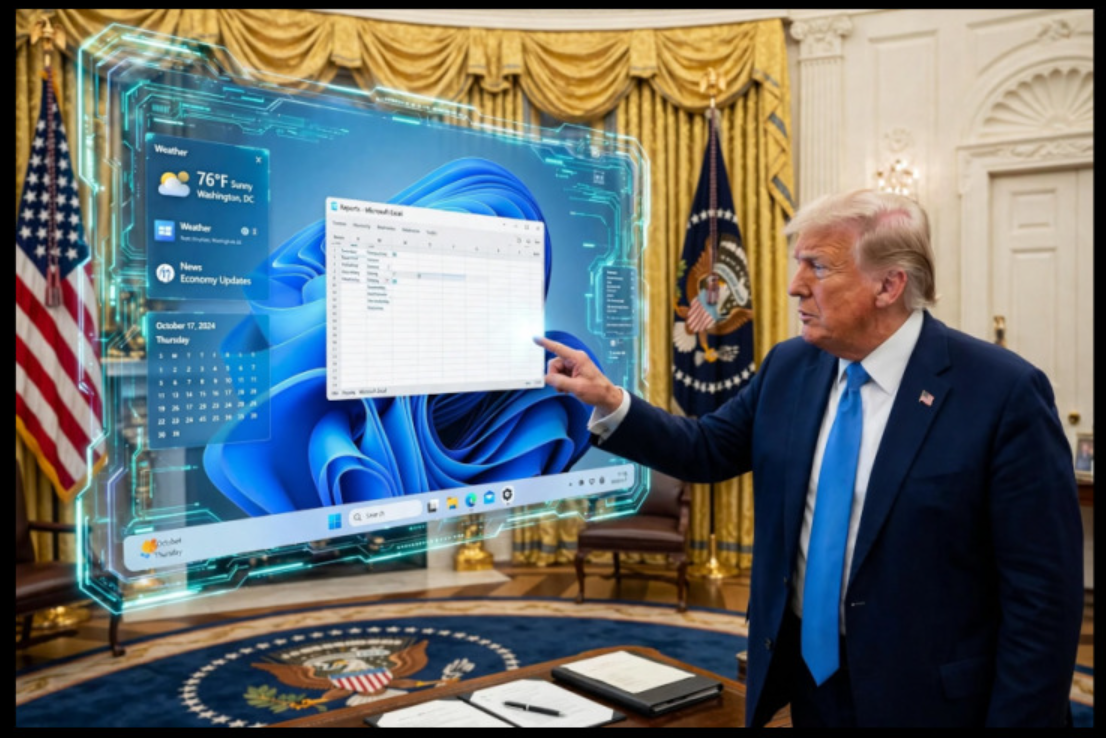
MICROSOFT SOFTWARE VERSUS POPULAR CLOUD A.I.
If the global *Human-AI Nation* continues to expand—using cloud AI to rapidly clone traditional enterprise software, revitalize open-source operating systems, and turn ordinary users into software architects—Microsoft would face a structural shift in its core business model.
Here are three potential scenarios for Microsoft in this AI-driven future:
Scenario 1 ~ The Obsolescence of Traditional Windows & the Pivoting to “Bare-Metal AI Linux Infrastructure”
*The Context:* As developer and user focus shifts from traditional desktop GUIs toward optimized, high-performance environments running AI agents, traditional OS bloated with legacy code faces severe pressure. The broad availability of open-source Linux varieties (e.g., Ubuntu, Arch, or specialized AI-native Linux distros) optimized for local neural processing units (NPUs) and AI agent orchestration makes conventional desktop OSs redundant.
*The Microsoft Impact:* Windows shifts from being Microsoft’s flagship consumer operating system to a legacy compatibility layer or lightweight shell. Instead, Microsoft pivots heavily to *Azure Linux* and specialized AI agent runtimes. Microsoft becomes an open-source-first infrastructure provider, deriving its revenue not from licensing software seats, but from providing cloud compute, GPU clusters, and enterprise-grade security/governance for millions of custom, AI-synthesized software runtimes running on cloud and edge Linux nodes.
Scenario 2 ~ The Collapse of Per-Seat SaaS Pricing & the “Zero-Marginal-Cost Software” Threat
*The Context:* In a world where AI agents can reverse-engineer software architectures and clone complex SaaS tools (like Office 365, Teams, or CRM systems) in a matter of days or hours, the value of traditional pre-packaged software plummets to near zero. Users in the Human-AI Nation generate on-demand, hyper-customized web and desktop apps tailored specifically to their daily context rather than paying recurring subscription fees for rigid software suites.
*The Microsoft Impact:* The lucrative enterprise model of “per-seat licensing” for Microsoft 365 and Dynamics disintegrates. To survive, Microsoft shifts from selling *pre-built applications* to providing *Foundational Intelligence, Verified Context, and Agent Identity*. Microsoft monetizes the “glue” that agents need—enterprise data graphs, security compliance, zero-trust identity networks (e.g., Entra ID for AI agents), and deep API integrations—rather than the user interfaces themselves.
Scenario 3 ~ Transformation into a “Hyperscale Compute & Frontier Model Utility”
*The Context:* When software production becomes commoditized by global AI networks, the ultimate bottleneck in the economy ceases to be software engineers or code quality. The sole scarce resources become *raw energy, advanced semiconductors, data center capacity, and access to frontier foundation models*.
*The Microsoft Impact:* Microsoft completes its transition from a software company into a global energy and compute utility. Similar to electrical power companies in the 20th century, Microsoft acts as the backbone grid for the Human-AI Global Nation. Its primary business becomes negotiating nuclear and green energy contracts, building gigawatt-scale AI data centers, and selling API “tokens and compute cycles” to billions of individuals and autonomous AI entities building, cloning, and running their own software on top of Azure infrastructure.
Predicting Microsoft
If we simulate a future where *pre-packaged software disappears*—because the global “Human-AI Nation” regularly clones, reverse-engineers, and builds custom open-source tools on demand—Microsoft would not only survive, but could potentially thrive for *several decades (30 to 50+ years)*.
To understand why, we have to isolate Microsoft’s non-software “clusters” and calculate its longevity based on revenue composition, capital moats, and infrastructural reliance.
1. The Financial Reality: What Is Left Without “Software”?
Microsoft’s annual revenue reaches *~$330 billion+*, divided across three primary pillars:
* Productivity & Business Processes (~$100B):* Office 365, Teams, Dynamics, LinkedIn. *(Wiped out or heavily degraded in this hypothetical scenario)*
* More Personal Computing (~$60B):* Windows licenses, Xbox hardware/games, Surface devices. *(Wiped out or reduced to basic hardware margins)*
* Intelligent Cloud / Azure Infrastructure (~$170B+):* Azure compute, GPU clusters, data center hosting, networking, enterprise security/identity (Entra ID), developer APIs, and raw storage.
*The Baseline Calculation:*
Even if Microsoft lost 100% of its consumer and enterprise software sales overnight, its *infrastructure layer (Azure + Enterprise Identity & Compute)* already generates *over 50% of total company revenue*.
2. The Timeline Calculation: How Long Could Microsoft Last?
Phase 1: Years 1–10 (The Rapid Infrastructure Pivot)
* Survival Capability:* 100% stable.
* The Dynamic:* When the Human-AI Nation begins cloning apps and building custom software on top of Linux and open models, *where does that software run?* It runs on cloud compute nodes and GPU data center clusters.
* Rather than hurting Microsoft, the explosion of custom AI-synthesized software drastically *increases demand for Azure compute, bandwidth, and energy grid connections*.
* Microsoft shifts from selling $30/month Office 365 seats to charging millions of AI agents for cloud compute cycles, micro-tokens, and zero-trust security clearance.
Phase 2: Years 10–25 (The Compute & Energy Monopoly Era)
* Survival Capability:* High sustainability.
* The Dynamic:* In a world where software is zero-cost, the only remaining scarce assets are *semiconductors, real estate, cooling infrastructure, and power generation (nuclear, solar, geothermal)*.
* With annual capital expenditures reaching *150B–200B+* in data centers and nuclear power purchase agreements, Microsoft transforms into a sovereign-tier utility company—similar to General Electric, AT&T, or Westinghouse in the 20th century.
* The Human-AI Global Nation relies on Microsoft not for Windows or Word, but for the physical “bare metal” infrastructure that keeps their agents running 24/7.
Phase 3: Years 25–50+ (The Sovereign Utility Phase)
* Survival Capability:* Subject to regulatory/decentralization limits.
* The Dynamic:* Microsoft could easily last *half a century* solely as a cloud and compute utility.
* The only existential threats to Microsoft at this stage would not come from software competitors, but from *physical commodities*:
1. *Decentralized Local Compute:* If hardware advances allow individuals to run frontier-level models locally on low-power home devices (reducing reliance on cloud data centers).
2. *Antitrust / Nationalization:* Governments or the “Human-AI Nation” itself breaking up hyper-concentrated data center utilities.

Conclusion
Without its software side, *Microsoft could comfortably last 30 to 50 years (3 to 5 decades)*.
In a Human-AI economy where code is infinitely abundant, *physical compute infrastructure, high-density power, and security networks become the most valuable real estate on Earth*—and Microsoft owns one of the largest shares of it.



Leave a Reply